
Why Bulk Kratom Buying Is Trending in 2025: Margins & Discounts
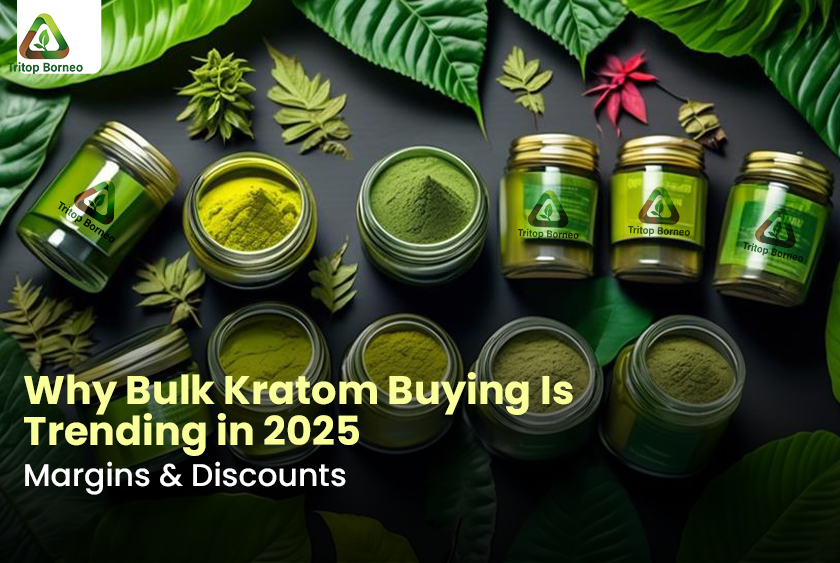
The global Kratom market in 2025 is evolving faster than ever — not just in volume, but in maturity. What was once a niche botanical trade has transformed into a structured, international commodity segment. With annual CAGR hovering around 15–18%, Kratom’s commercial ascent continues to accelerate.
The demand surge is fueled by several factors: the normalization of herbal wellness, post-pandemic manufacturing consistency, and the rise of small supplement brands seeking private-label Kratom products. This, in turn, has led to one major market shift — bulk Kratom buying. Importers, retailers, and manufacturers are all moving toward bulk purchases for one reason: stability.
Supply reliability, transparent sourcing, and stronger trade margins have made bulk Kratom powder the most practical form of purchase. By buying directly from certified exporters, businesses save heavily on per-unit costs, reduce logistical uncertainty, and maintain consistent quality.
Why Bulk Kratom Buying Is Trending in 2025 – An Analysis
The shift toward bulk Kratom purchasing isn’t a random market swing. It’s the outcome of multiple forces aligning — economics, quality control, compliance, and customer behavior.
1. Quality & Consistency
Buyers today don’t gamble on uncertain suppliers. With the introduction of GMP-certified bulk Kratom powder, exporters have brought pharmaceutical-level discipline to a botanical product. The industry is now more standardized: every kilo tested, every batch traceable. This has reshaped importer confidence.
2. Cost Margins & Discounts
Margins are the real magnet. When importers buy Kratom in bulk, the cost per kilogram drops by as much as 20–40% compared to fragmented orders. Volume-based discounts directly translate into broader retail profits. For distributors, the math is simple — the more they buy, the higher their control over pricing, packaging, and delivery timing.
This cost efficiency isn’t limited to large enterprises. Even medium-scale supplement brands or wellness retailers can achieve 10–15% higher ROI by shifting to bulk Kratom for sale models.
3. Supply Chain Reliability
Direct farm-to-export systems, particularly from Indonesia’s Kalimantan region, have become the backbone of the market. Cutting out middlemen ensures fresher harvests and consistent alkaloid levels. Exporters like Tribeka have optimized this system to achieve military-grade consistency — a level of precision previously unseen in Kratom production.
4. Kratom Extract Bulk Market
Beyond leaf and powder, the Kratom extract bulk segment has seen one of the sharpest rises. Concentrated extracts are now being used in everything from energy beverages to functional supplements. With an estimated CAGR of over 20%, this subcategory alone may account for a significant share of the overall Kratom trade by 2027.
5. Sustainability & Traceability
Modern importers are no longer satisfied with anonymous bags of powder. They seek traceable, ethically sourced Kratom with verifiable origin data. Eco-conscious production has also become a selling point, making certified bulk purchases not just cost-efficient but reputation-safe.
6. Import & Compliance Shifts
Regulatory frameworks in major importing nations have stabilized. Instead of banning, authorities are now emphasizing lab validation and transparent documentation. This has made compliance part of the buying process — another reason serious importers prefer bulk wholesale Kratom from verified exporters rather than fragmented grey-market sources.
7. Market Forecast
The Kratom export market, currently estimated in the multi-hundred-million range, is expected to maintain a CAGR of around 16% through 2030. Most of this growth will stem from bulk and B2B transactions rather than retail. As consumer awareness increases, so will the demand for bulk-sourced and lab-tested Kratom formulations.
Margin Game: The Economics Behind Buying Kratom in Bulk
In business, predictability equals profit. The economics of buying Kratom in bulk work on that principle. The ability to negotiate directly with suppliers allows resellers to define their own price ceilings.
A typical retail vs bulk ROI comparison shows:
| Purchase Type | Avg. Cost per kg | Avg. Profit Margin | Risk Level |
| Retail Orders | High | 10–15% | Unstable |
| Bulk Orders | Moderate | 25–40% | Controlled |
| Wholesale Contracts | Lowest | 45–55% | Minimal |
This stability is especially valuable for supplement brands scaling globally — one consistent batch quality means fewer rejections, better reviews, and brand longevity.
Inside the Market: Recent Trends and Numbers (2024–2025)
Trends point to diversification. Kratom extract bulk products, standardized blends, and encapsulated formulations are dominating shipments. The global supply chain has become increasingly digitized, with exporters offering blockchain-backed traceability.
Another clear pattern: import volumes rising steadily in North America and Europe, with Indonesia maintaining over 90% export dominance. As logistics infrastructure matures and inspection delays reduce, the Kratom industry’s CAGR of 15–18% seems well-grounded.
Interesting Facts about Kratom Trade
- Indonesia currently supplies over 90% of the world’s Kratom.
- Bulk Kratom transactions in 2025 grew by 22% year-on-year.
- Average importer order sizes doubled between 2022 and 2025.
- GMP certification now influences over half of global bulk purchases.
- Despite tighter inspections, bulk Kratom powder pricing remains stable thanks to streamlined export routes.
Case Study – How a B2B Importer Increased Margins through Bulk Kratom Deals
Consider a wellness distributor sourcing Kratom from fragmented online vendors. They faced irregular potency, unpredictable shipping, and low repeat customer trust.
In 2024, the company switched to bulk wholesale Kratom supply contracts with a certified exporter. The results:
- Procurement costs dropped by 28%.
- Product rejection rate fell by 70% due to consistent testing.
- Annual profit margins grew from 18% to over 40%.
This transformation wasn’t about luck — it was about systemized sourcing. Buying Kratom in bulk eliminated guesswork and replaced it with operational control.
From Kalimantan to the World: Tribeka’s Commitment to Consistency
At the heart of this market evolution stand exporters like Tritop Borneo (Tribeka). Based in Kalimantan, Tribeka is not a trader in name only — it’s an exporter built on discipline and precision.
Every kilo of Kratom powder or extract produced under Tribeka’s process follows GMP-certified standards. The leaves are handpicked, dried with precision, milled in hygienic facilities, and packed for international export. The company’s core strength lies in military-grade consistency — a phrase that defines its commitment from farm to freight.
For serious importers seeking traceable, potent, and compliant Kratom supply, Tribeka represents the modern blueprint of reliability.
Closing Thoughts: The Future of Kratom Wholesale in 2025 and Beyond
The Kratom industry’s path is clear — toward transparency, scale, and structure. The rise in bulk Kratom buying is not a short-term price chase but a strategic evolution. As demand grows, only exporters who combine science, ethics, and scale will define the next phase of this industry.
For importers and wellness brands, the future belongs to those who think in bulk — in volume, in vision, and in value.
And when the world looks for bulk Kratom for sale that stands the test of consistency and trust, Tribeka will be the name that delivers — not because it claims to, but because it’s built to.