
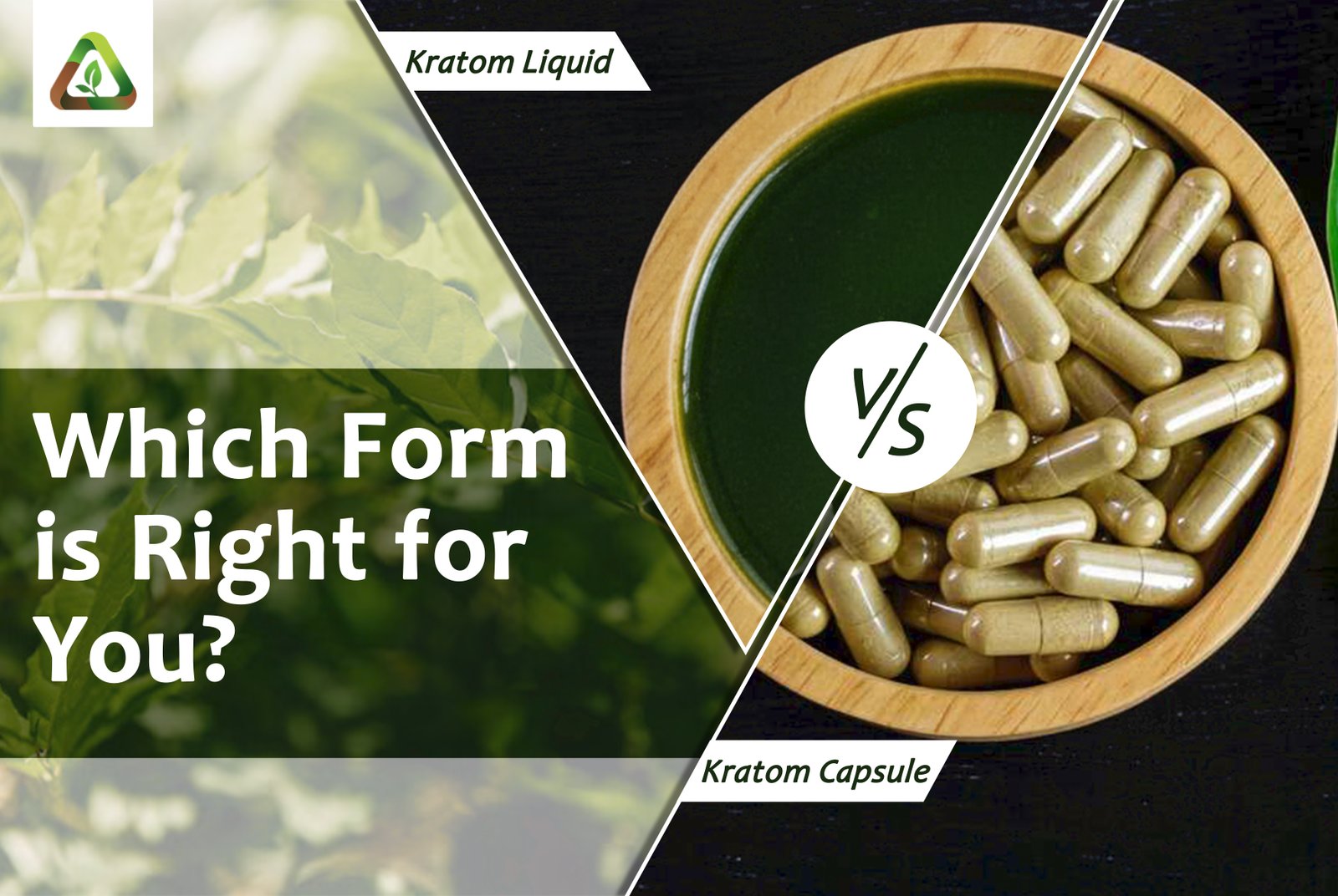
Kratom Capsules vs Liquid — Which Form Is Right for You?
Introduction: The Modern Kratom Market and Consumption Trends
The global herbal wellness scene has found a new favorite — kratom. Once a regional plant native to Southeast Asia, it’s now a booming export in the U.S., Europe, and beyond. With consumers chasing cleaner energy, calmer moods, and natural focus, kratom has become the next big thing in the botanical supplement world.
And as demand rises, so does product variety. Gone are the days when powder was the only option. Today’s shelves feature kratom capsules, liquid shots, extracts, and tinctures, each promising something different. The big question now echoing across the market is simple: kratom capsules vs liquid shots — which one truly delivers?
According to global estimates, the kratom market is projected to grow at a CAGR of 15–17% between 2024 and 2030, driven by rising demand for natural mood and energy supplements.
| Form | CAGR (2023–2030) |
| Powder | 13.4% |
| Capsules | 16.8% |
| Liquid / Extracts | 17.2% |
Understanding Kratom Basics
What exactly is kratom?
Kratom (Mitragyna speciosa) is a tropical evergreen from the coffee family, native to Indonesia, Malaysia, and Thailand. Its active alkaloids — mitragynine and 7-hydroxymitragynine — interact with receptors in the body to influence mood, energy, and focus.
Today, kratom comes in multiple forms: powder, capsules, and liquid extracts or shots. Among these, OPMS Kratom is often cited as a benchmark for potency and quality in extract-based products — though our goal here is to compare forms, not brands.
Kratom Capsules vs Liquid: The Core Comparison
| Feature | Kratom Capsules | Kratom Liquid / Shots |
| Convenience | Easy to carry, pre-measured | Ready to use, no prep |
| Potency | Controlled dosage | Higher concentration |
| Onset Time | 30–45 minutes | 5–10 minutes |
| Duration | Longer-lasting | Shorter but stronger |
| Taste | Neutral | Bitter or flavored |
| Cost per Dose | Generally lower | Higher (due to extraction) |
| Shelf Life | Longer, stable | Shorter, needs care |
Kratom Capsules vs Liquid Shots: Which Performs Better?
Capsules win on convenience and precision — no mess, no measuring. Liquids, on the other hand, act faster thanks to higher alkaloid concentration and quicker absorption. The right pick depends entirely on your priorities: consistency or immediacy.
Factors That Help You Decide — Which Form Is Right for You
Desired Effects & Potency Needs
If you prefer a steady, sustained experience, capsules are ideal — their effects build gradually. Liquids work best when you need a quick, intense boost within minutes.
Rumor check: Many think liquid kratom is “synthetic.” Not true — authentic extracts simply concentrate natural alkaloids from kratom leaves.
Convenience & Portability
Capsules are discreet and easy to stash in a bag or pocket. Liquids can spill or require refrigeration once opened, making them less travel-friendly.
Tolerance Level & Dosage Precision
Each capsule typically contains a fixed milligram amount, ensuring repeatable dosing. Liquids require measuring with droppers — offering flexibility but also the risk of overuse if not careful.
Taste & Sensory Preference
Capsules mask kratom’s naturally bitter taste, while liquids often preserve or enhance it with herbal or fruity flavors. Some enjoy that earthy tone; others absolutely don’t.
Onset Speed & Duration
Capsules need time to digest, which delays the alkaloids’ release. Liquids bypass that process, entering the bloodstream faster — but their effects taper off sooner.
Cost vs Value
Capsules tend to be cheaper per serving, while liquids command a premium for convenience and potency. Think of it like instant espresso vs. slow-brew coffee — one’s fast, one’s enduring.
Quality & Brand Trust
Extraction quality matters more than form. Brands like OPMS Kratom demonstrate how controlled extraction can yield potent yet consistent results. Always look for GMP-certified products with verifiable lab testing.
Rumors & Myths
- “Liquid kratom is always stronger.” Not necessarily — it depends on extract ratio and purity.
- “Capsules are weaker.” Only if they use unstandardized or low-grade powder.
Lifestyle Fit
- Athletes & Professionals: Capsules for steady focus.
- Shift Workers or Travelers: Liquids for quick relief on the go.
- Wellness Enthusiasts: Capsules for balanced daily use.
The Science Behind Absorption
The key difference lies in bioavailability. Capsules must pass through the digestive system, delaying onset. Liquids, however, deliver alkaloids directly into circulation, cutting onset to just 5–10 minutes. This faster absorption explains their rapid but shorter effect. Some users even pair both forms — capsule for base effect, liquid for quick top-up — though moderation is essential.
Safety, Dosage, and Responsible Use
Whether you pick capsules or liquids, start small.
- Capsules: Begin with 2–3 capsules (1–1.5 g total) to gauge tolerance.
- Liquids: 0.5–1 mL of extract is often enough for beginners.
Avoid mixing both forms in the same session, and don’t exceed your comfort zone. While kratom remains legal in many regions, it’s still under regulatory observation by the FDA and DEA — responsible, informed use ensures safety and long-term access for everyone.
Industry Insight: Global Demand and Market Performance
| Region | Leading Form | CAGR % | Market Share 2024 |
| North America | Capsules | 16.2 | 45% |
| Europe | Capsules | 14.9 | 33% |
| Southeast Asia | Liquid | 18.5 | 22% |
The numbers tell the story — capsules dominate the Western markets due to stability and dosing precision, while liquids lead in Southeast Asia, where extraction expertise and consumer familiarity run deep. Indonesian and U.S. suppliers continue scaling production to meet this expanding demand, especially for export-grade kratom.
Quality and Supplier Considerations
When choosing any kratom product, supplier integrity matters more than form. Look for:
- GMP and ISO certifications
- Third-party lab testing for alkaloid content
- Transparent sourcing from verified farms
Reputable producers such as OPMS Kratom and certified Indonesian exporters set the bar high for quality consistency and compliance — ensuring that what you consume is pure, potent, and traceable.
Conclusion: Choosing What Fits You Best
At the end of the day, there’s no universal winner in the kratom capsules vs liquid debate. It’s about matching your goals to the form that serves you best.
- Capsules are discreet, predictable, and ideal for sustained balance.
- Liquids are fast, potent, and perfect for on-demand energy or relaxation.
Whatever you choose, the golden rule is consistency and credibility — buy only from verified GMP-certified suppliers who understand the plant and respect the process.
And if you’re sourcing from the heart of Kalimantan, Tritop Borneo (Tribeka) stands tall as Indonesia’s trusted GMP-certified kratom exporter. Born in the muddy trails where kratom thrives wild and pure, Tribeka’s mission is simple: deliver honest quality with military-grade consistency. Because in the world of kratom, authenticity isn’t a claim — it’s a commitment.